Groot Players Still Griefing Marvel Rivals Matches With Thornlash Walls as Community Demands Harsher Penalties
In the fast-paced world of multiplayer hero shooters, a coordinated team can execute flawless strategies and turn the tide of battle in seconds. Yet even the most dedicated squads occasionally fall victim not to enemy fire, but to a member of their own team. Since its explosive launch in December 2024, Marvel Rivals has captivated millions with its dynamic hero roster and destructible environments. However, a particular form of internal sabotage has driven the community to collective fury: Groot players who use the Vanguard hero’s Thornlash Wall ability to deliberately barricade their own spawn area.
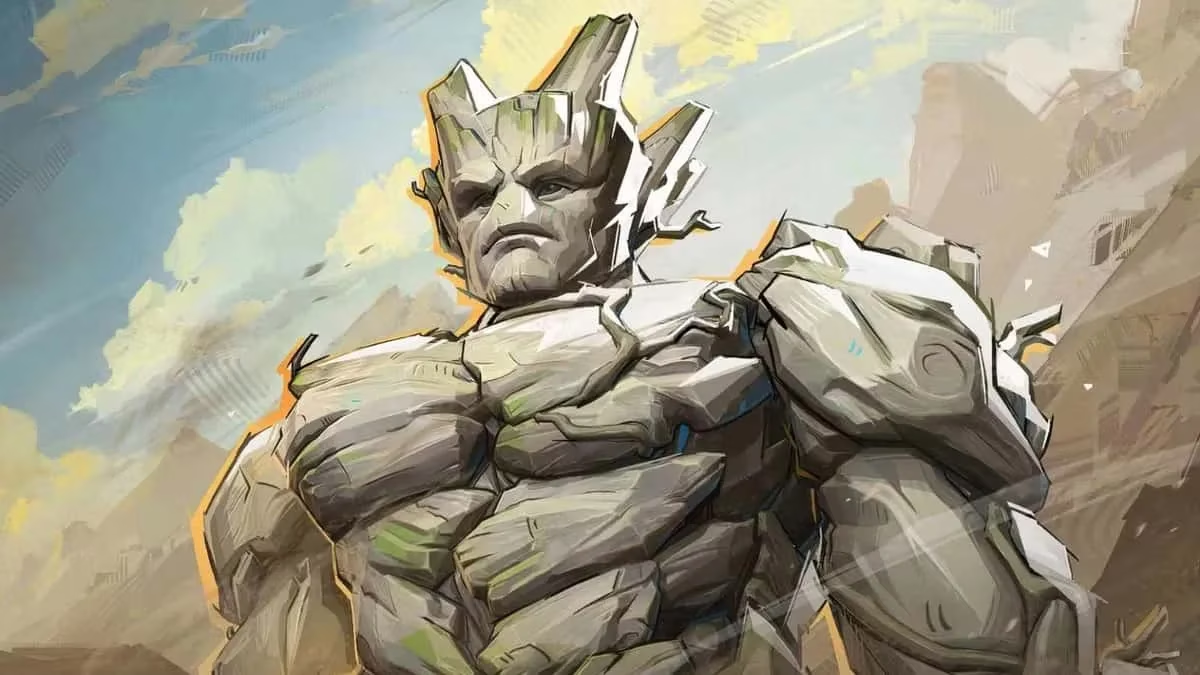
The tactic is strikingly simple and profoundly destructive. A Groot on the defending or attacking side positions himself at the spawn room exits and consecutively erects thorny barriers across every doorway. Each wall blocks movement entirely for its duration, effectively trapping teammates inside the respawn zone. Unlike a deliberate disconnect or an inactive player who at least leaves slots open for others to act, the wall-blocking Groot proactively prevents allies from entering the fray. The result is a match that slides from competitive to completely unplayable in under a minute.
A wave of outrage erupted on social platforms after one Reddit user shared a short clip of the griefing in action. The original poster called the behavior “worse than afk or leaving,” a statement that resonated deeply.
“I would much rather you just leave the match or sit in spawn,” the player wrote, “than actively prevent your teammates from fighting just so we lose more quickly.”
Other users quickly echoed the sentiment. The discussion highlighted a core frustration: when a teammate disconnects, the remaining squad can still contest objectives with a numbers disadvantage. But a Groot jailer strips the team of any agency, forcing a helpless spiral while the match clock still ticks. Some community members expressed sheer disbelief. “Never understood team sabotage,” one comment read. “What do you gain from forcing someone else to lose?”
By early 2025, it became clear that this variety of toxicity was not an isolated incident. Multiple players reported encountering similar Groot saboteurs who employed the same technique, often after a failed surrender vote or as retaliation for perceived misplays. According to those who dug into match replays, some offenders had perfected the art of wall placement so that doors became impassable cages within seconds of spawning.
At that time, the reporting system left victims with a sense of futility. Although submitting a report was the only available action, the resulting bans seldom lasted long enough to deter repeated offenses. One frustrated fan summed it up bluntly: “This is the biggest issue with the game.”
Developer NetEase Games, however, did not remain silent. In January 2025, the studio rolled out a new Cheater Detected notification that would appear in real-time during matches, allowing every player to see when a confirmed cheater had been removed. The feature was initially designed to combat aimbots and wallhacks, but community managers hinted that the team was also exploring behavioral detection models. By mid-2025, internal testing began on an anti-griefing algorithm capable of identifying suspicious placement patterns—such as a Groot repeatedly casting walls inside spawn rooms without any offensive purpose.
Fast forward to early 2026, and the landscape has shifted noticeably. The updated reporting system now includes a dedicated “Sabotage” category, which covers ally-blocking, intentional feeding, and resource wasting. Players who submit a valid sabotage report receive a confirmation message with a case ID, and when sanctions are applied, the reporter is notified. Offenders face escalating penalties: a first offense triggers a 7-day competitive queue lock and a mandatory replay review tutorial on cooperative gameplay. Repeated infractions can lead to season-long bans from all ranked modes and permanent removal in extreme cases.
Despite these improvements, dedicated trolls continue to find workarounds. Some switch between multiple accounts to avoid longer bans, while others use timing tricks to spread out their griefing sessions so automated detection flags them less frequently. The community has responded with grassroots education, creating quick-reference videos that teach players how to jump through small gaps in Groot walls or destroy specific segments quickly—though the latter requires coordinated team focus that is rarely available during a chaotic respawn.
Beyond the specific Groot issue, NetEase has maintained its aggressive stance against cheaters. The mouse and keyboard adapter crackdowns on consoles, first implemented in 2025, now use input pattern analysis to detect spoofed controllers with near-perfect accuracy. The Cheater Detected system has expanded to show not only username bans but also a live feed of removed accounts in the match history tab, promoting transparency.
Yet the psychological impact of being imprisoned by one’s own teammate lingers. Game analysts note that the frustration generated by ally-blocking often exceeds the anger caused by losing to superior opponents because it attacks the social contract of team play. In a title where hero synergies and ultimate combos define the meta, a single Groot intent on sabotage can dismantle morale faster than any patch balance issue.
As Marvel Rivals moves deeper into its second year, the duel between developers and trolls continues. The community’s voice has proven crucial, turning isolated clips into catalysts for lasting change. While the Groot griefing tactic may never disappear entirely, the walls around it are closing in—brick by brick, and patch by patch.
Comments