Luna Snow's Marvel Rivals Mirae 2099 Skin Leaps to Comics in Gorgeous Variant Cover
It is no secret that Luna Snow, once a niche favorite among mobile gamers and die-hard comic readers, has absolutely blown up into the big leagues since Marvel Rivals landed back in December 2024. Fast-forward to 2026, and the K-pop superhero is no longer just a playable character in a hit hero shooter—she is a certified phenomenon, bridging the gap between gaming culture and the printed page like never before. The latest proof of her star power comes from a breathtaking variant cover that brings one of her slickest in-game looks directly into the Marvel Universe. That\u2019s right, her futuristic Mirae 2099 skin, which had players grinding for hours to unlock, is now official comic book art, and honestly, it looks even better on pulp.
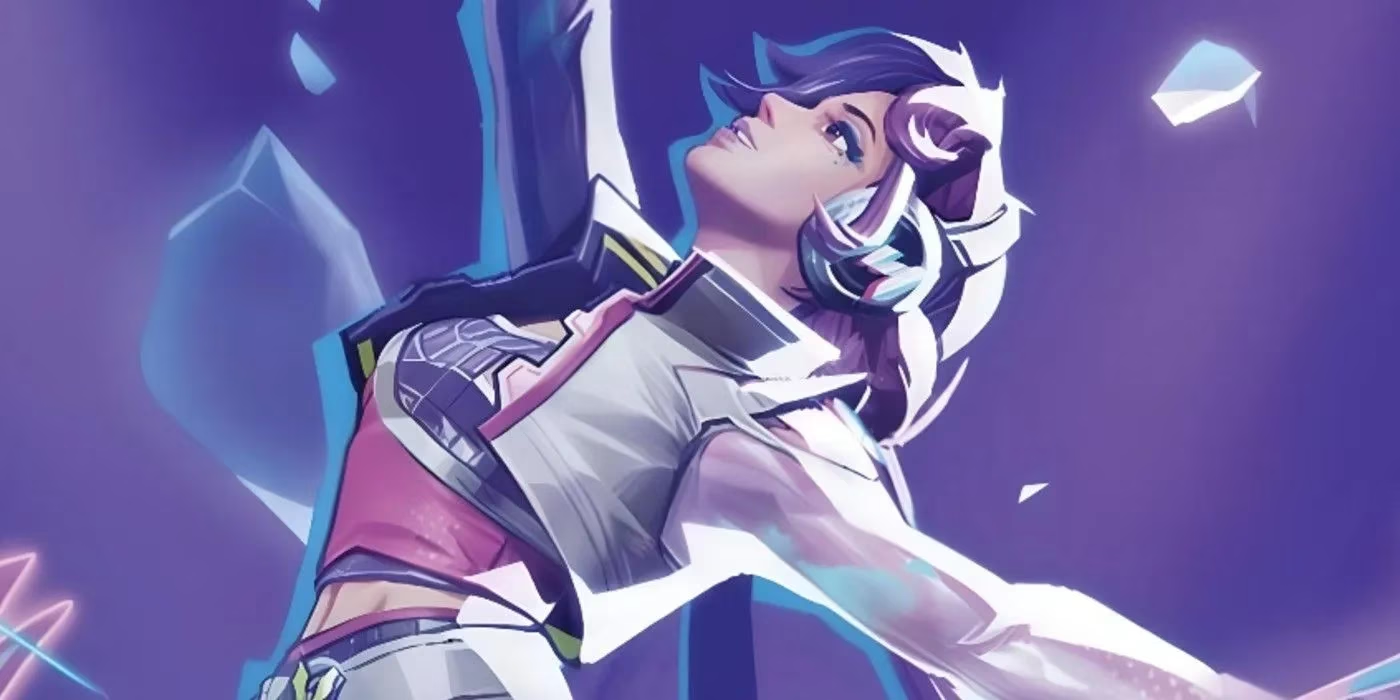
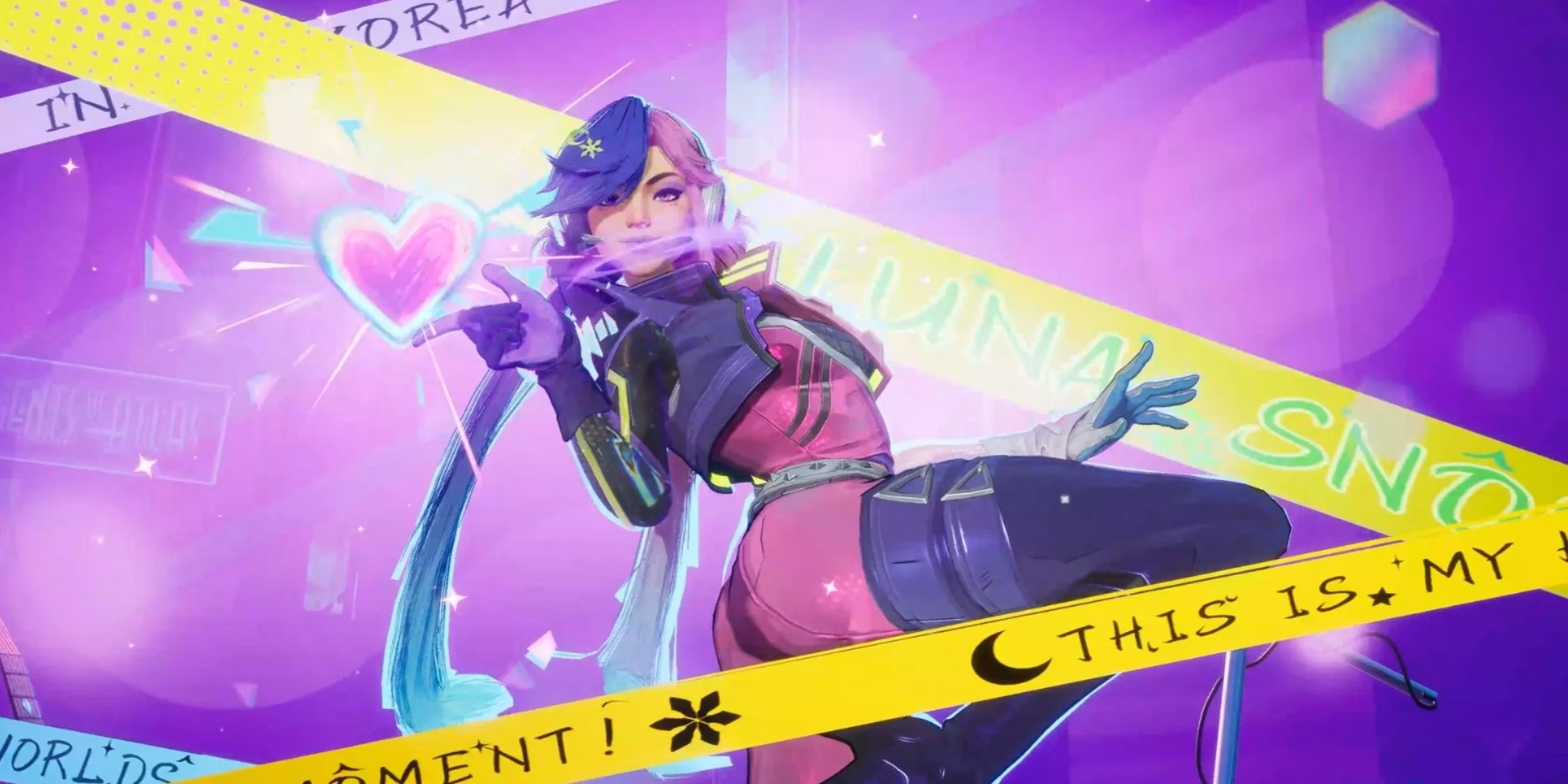
When NetEase Games dropped the Mirae 2099 skin, the fanbase collectively lost its mind, and for good reason. The design draws heavily from the classic Marvel 2099 aesthetic that reimagined iconic heroes in a grim, dystopian future back in the 1990s. In Luna\u2019s case, the futuristic vibe merges with her pop-star identity in a way that feels both nostalgic and fresh out of the oven. She rocks chunky headphones, a vibrant pink-and-purple outfit that screams \u201cmain stage at a holographic concert,\u201d and pigtails that give her an uncanny resemblance to the legendary Vocaloid Hatsune Miku. This combination has cemented her status not just as a combat healer on the battlefield, but as a musical icon who can steal the show anywhere she goes. As fans would say, the dev team knocked it out of the park with this one.
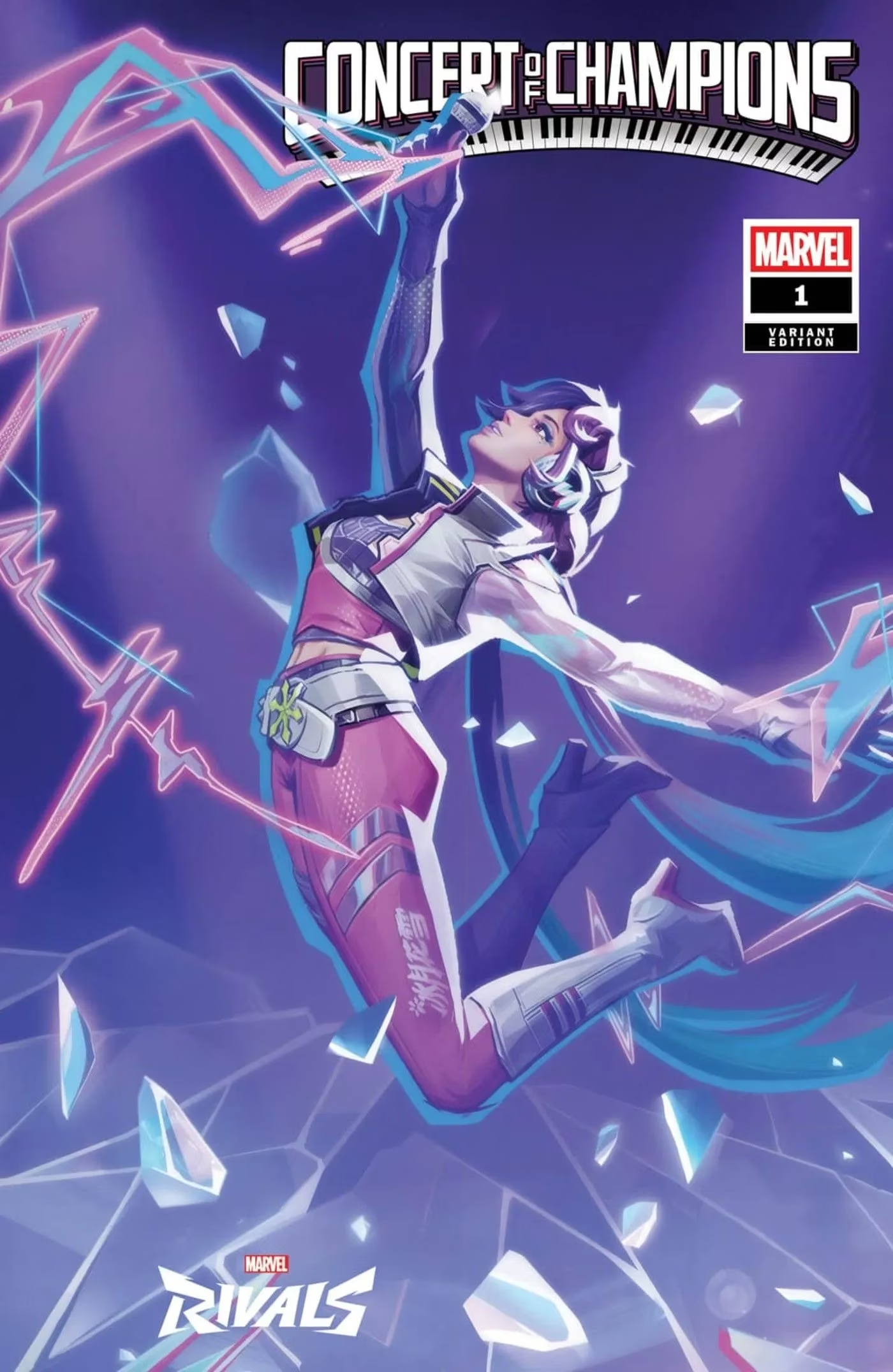
The variant cover in question is for Concert of Champions #1, a one-shot that hit stands way back on April 2, 2025, and united Marvel\u2019s musical bigwigs\u2014think Dazzler, the always radiant Alison Blaire, alongside Seol Hee (Luna Snow\u2019s birth name when she isn\u2019t commanding stages). Written by Jason Loo with art by Rafael Loureiro, the issue was a love letter to sound-based superhumans, but the real talk of the town was that variant. Illustrated directly by the talent at NetEase Games, it transported Luna\u2019s 2099 rendition from digital pixels to glossy cover stock, making it a must-have for collectors who wanted a piece of Marvel Rivals history to sit next to their longboxes. Looking back from 2026, that cover not only spiked sales but also signaled a new era where video game designs are treated as canon-worthy additions to the comic mythos.
What makes this crossover particularly sweet is Luna Snow\u2019s journey. She first saw the light of day in the Marvel Future Fight mobile game, then tiptoed into comics in 2019\u2019s War of the Realms: New Agents of Atlas #1 by Greg Pak and Gang Hyuk Lim. Despite her earworm tracks and icy powers, she never quite broke through the glass ceiling of mainstream recognition. Marvel Rivals changed all of that overnight, taking her from \u201cwho?\u201d to \u201chow do I counter her ultimate?\u201d in the span of a single season. Suddenly, Luna was everywhere\u2014streaming on Twitch, starring in fan art, and, crucially, getting the attention of comic editorial teams who saw a golden opportunity to give her a proper homecoming.
Beyond that eye-popping one-shot, Luna\u2019s resurgence continued to snowball. By late 2025, she had joined the cast of Doom\u2019s Division, a series written by Yoon Ha Lee with art by Minkyu Jung that revived the Tiger Division\u2014South Korea\u2019s premier superhero team\u2014operating under the iron fist of Doctor Doom. In 2026, that story is considered a turning point for the character, showing that she can hold her own in a high-stakes narrative far from the glitz of the concert hall. Comic fans who only knew her from the game were treated to a deeper dive into Seol Hee\u2019s personality, her struggles as a celebrity in a world where gods and monsters regularly wreck cities, and her loyalty to her teammates. The Mirae 2099 look that started it all on that variant cover became a symbol of her transformation: no longer just a pop star guest-starring in a shooter, but a full-blown Marvel heavyweight.
The ripple effect of Marvel Rivals on Luna Snow\u2019s trajectory cannot be overstated. The game boasts an 8/10 rating on multiple platforms, a Top Critic Average of 78/100 on OpenCritic with an 84% recommendation rate, and an active player base that keeps servers buzzing well into 2026. The Unreal Engine 5 visuals made every skin pop, but the Mirae 2099 design had that special sauce\u2014a blend of cyberpunk chic and bubblegum pop that resonated with an audience hungry for something different. When the variant cover dropped, it felt less like a marketing gimmick and more like a natural evolution. After all, why shouldn\u2019t a game design influence the comics when the reverse has been true for decades?
It is also worth noting that the collaboration set a new precedent. With Marvel embracing concepts born in digital lobbies, the line between mediums has blurred in the best way possible. In 2026, we see more games feeding back into the source material, but Luna Snow\u2019s Mirae 2099 cover remains a standout moment\u2014the point where a skin became a statement. Her chunky headphones and Twin Pigtails of Destiny are now as iconic to a whole generation as Wolverine\u2019s claws. Not bad for a character who once struggled to get a single solo issue.
As we look back from the vantage point of 2026, it is clear that Luna Snow\u2019s rise is a textbook example of how video games can breathe new life into comic book lore. She went from a niche mobile game original to a viable headliner, and that jaw-dropping variant cover was the victory lap. Whether you are a day-one Marvel Rivals player or a Wednesday warrior picking up fresh floppies, Luna\u2019s story is a reminder that sometimes the best characters just need the right stage. And if that stage happens to come with neon lights, a killer 2099 makeover, and a chart-topping single in the background? Well, that is just the cherry on top.
Data referenced from Digital Foundry helps frame why Unreal Engine 5-driven hero shooters like Marvel Rivals can turn a standout cosmetic such as Luna Snow’s Mirae 2099 into a cross-media talking point: when lighting, materials, and animation readability are pushed high enough, a “skin” starts functioning like a definitive character look that audiences recognize instantly. That same fidelity makes it easier for Marvel to translate a game-original design into print—treating the in-game silhouette, color blocking, and futuristic 2099 styling as reference-ready visual canon for variant cover art and broader brand continuity.
Comments