The DC Rivals Dream: James Gunn’s Cautious Openness to a Hero Shooter Phenomenon
The year is 2026, and the halls of DC’s creative stronghold hum with a nervous energy. Across the gaming landscape, Marvel Rivals has become nothing short of a cultural hydra, having devoured the attention of over 40 million players since its furious emergence. NetEase’s vibrant hero shooter, with its chaotic skirmishes between Spider-Man and Star-Lord, has not only cemented the genre’s staying power but also cast a long, envious shadow over the architects of DC’s legendary pantheon. The conversation in every corner of the industry circles a single, tantalizing question: what if the capes of Superman, the lasso of Wonder Woman, and the grim stealth of Batman could collide in a similar arena? The thought isn't just fantasy; it’s a slow-burning ember that DC Studios’ co-chair James Gunn has finally acknowledged, though with the guarded optimism of a man who has seen Icarus fly too close to the sun.
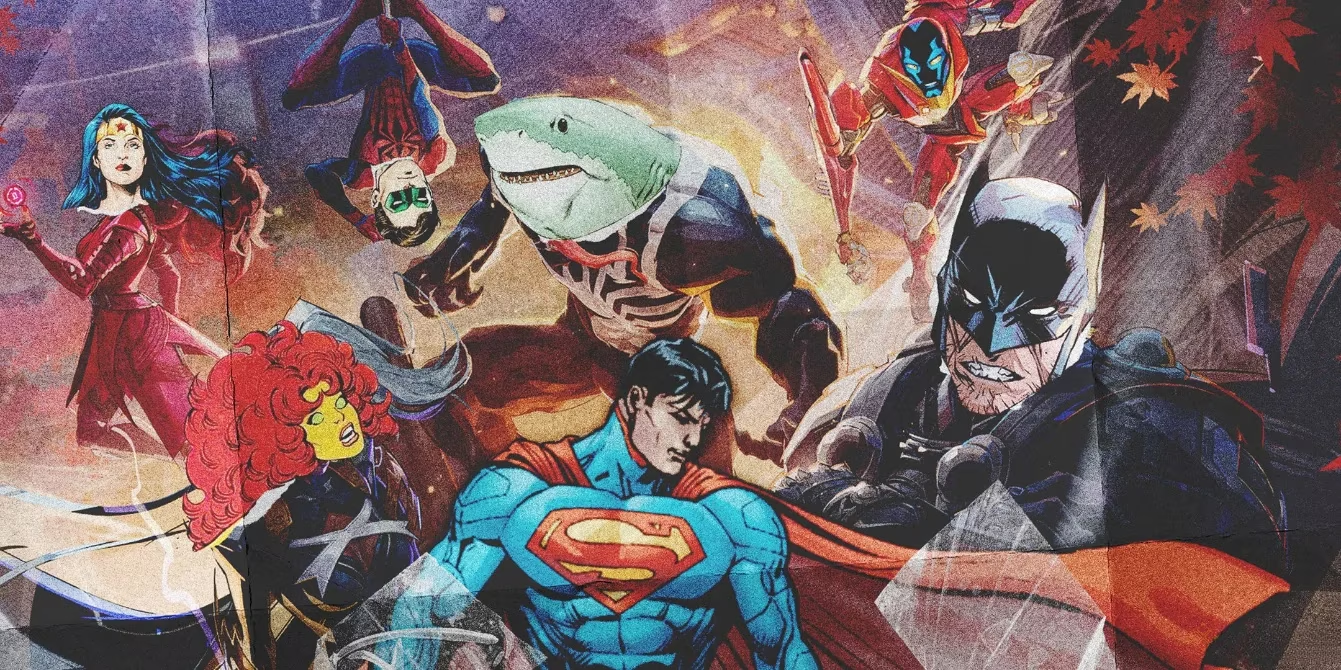
During a press gathering that had fans hanging on his every syllable, Gunn fielded a barrage of queries about the intertwined futures of film, television, and interactive media. When the inevitable question about a DC counterpart to Marvel Rivals surfaced, the room stilled. Gunn’s response was disarmingly succinct, yet it rippled outward with immense implication: “Totally possible, I’d be open to it.” That single sentence, devoid of corporate jargon or noncommittal deflection, ignited forums and Discord servers overnight. It was the first official quasi-endorsement of an idea that had long existed only in the wishful hearts of gamers imagining Green Lantern constructs clashing with the Speed Force in a team-based slugfest.
Yet, behind that open door lies a corridor choked with thorns. The specter of imitation looms large; any DC hero shooter would inevitably face accusations of being a brazen copycat, much as Marvel Rivals once weathered comparisons to Overwatch. The irony is not lost on anyone. The deeper peril, however, is temporal. Crafting a competitive multiplayer experience from scratch, one that could stand shoulder-to-shoulder with a well-oiled behemoth, is a monumental undertaking. Even if a clandestine project had been born the very moment Marvel Rivals exploded onto the scene in its beta phases, the development cycle would stretch at least until 2028. By then, the voracious appetite of the live-service market, notorious for devouring its darlings, might have moved on to a new flavor of the month.
Gunn, a storyteller deeply aware of narrative architecture, did not stop at hypotheticals. He revealed that serious dialogues have taken place with legendary studios like Rocksteady and NetherRealm, architects of the Arkham and Injustice legacies. Yet, the sobering truth he delivered was that a core game truly embedded within the freshly forged DCU under his and Peter Safran’s reign is still “a couple of years away.” This timeline whispers a cautionary tale that echoes through the empty lobbies of Suicide Squad: Kill the Justice League. That title, a fervent attempt to chase the live-service lightning, stumbled catastrophically—not because of a lack of star power, but because it arrived when the zeitgeist had mutated. Committing tens of millions of dollars to a genre that feels omnipresent today is a gambler’s bet on a roulette wheel that spins in slow motion.
Consider the intricate tapestry a DC Rivals would need to weave. The roster alone would spark holy wars among fans: should it debut with classic Trinity plus a deep cut like Booster Gold? How would one faithfully map Batman’s tactical, gadget-dependent methodology into a format that also accommodates the raw, city-leveling punch of Darkseid? These are delicious problems, the kind that game directors dream of solving on sticky notes late at night. The market, however, is unforgiving. Player counts are not just numbers; they are tidal forces. A launch that misses the wave of peak hero-shooter enthusiasm could see even the mightiest Justice League relegated to a footnote in gaming history, another digital gravestone alongside the numerous live-service titles that launched to fanfare and died to silence.
The community’s pulse, meanwhile, races with both anticipation and anxiety. In subreddits and streaming chats, armchair developers are already drafting ability kits for The Flash, imagining time-dilation ultimates, or debating whether Green Arrow’s arrows should have physics-based trajectory drop-off like Hanzo’s. The creative well is bottomless, and Gunn’s remark has validated these collective daydreams. It transformed a forbidden hope into a “maybe,” a subtle but seismic shift. Still, the wiser veterans temper their excitement. They remember that for every Fortnite that invents a perpetual motion machine of engagement, a hundred others crumble. DC’s leadership, burnished by recent box office renaissances, is keenly aware that a misstep in the interactive realm can tarnish the meticulously polished shield of their intellectual property.
As 2026 unfolds, the notion of a DC Rivals exists in a state of quantum possibility. James Gunn has left the door ajar, a sliver of light cutting through the darkness of corporate uncertainty. It is not a promise, but a permission—a signal to the creative cosmos that the idea is not heresy. The battlefields of tomorrow, whether they arrive on our screens in 2029 or remain forever conceptual, are haunted by the silhouetted shapes of Kryptonians and Amazonians waiting for their respawn timer. For now, the lantern’s ring glows faintly, a beacon of potential in a genre that devours itself just as quickly as it crowns kings. The world watches, controllers in hand, ready to choose their allegiance to the bat or the sun.{
"title": "The DC Rivals Dream: James Gunn’s Cautious Openness to a Hero Shooter Phenomenon",
"content": "The year is 2026, and the halls of DC’s creative stronghold hum with a nervous energy. Across the gaming landscape, Marvel Rivals has become nothing short of a cultural hydra, having devoured the attention of over 40 million players since its furious emergence. NetEase’s vibrant hero shooter, with its chaotic skirmishes between Spider-Man and Star-Lord, has not only cemented the genre’s staying power but also cast a long, envious shadow over the architects of DC’s legendary pantheon. The conversation in every corner of the industry circles a single, tantalizing question: what if the capes of Superman, the lasso of Wonder Woman, and the grim stealth of Batman could collide in a similar arena? The thought isn't just fantasy; it’s a slow-burning ember that DC Studios’ co-chair James Gunn has finally acknowledged, though with the guarded optimism of a man who has seen Icarus fly too close to the sun.
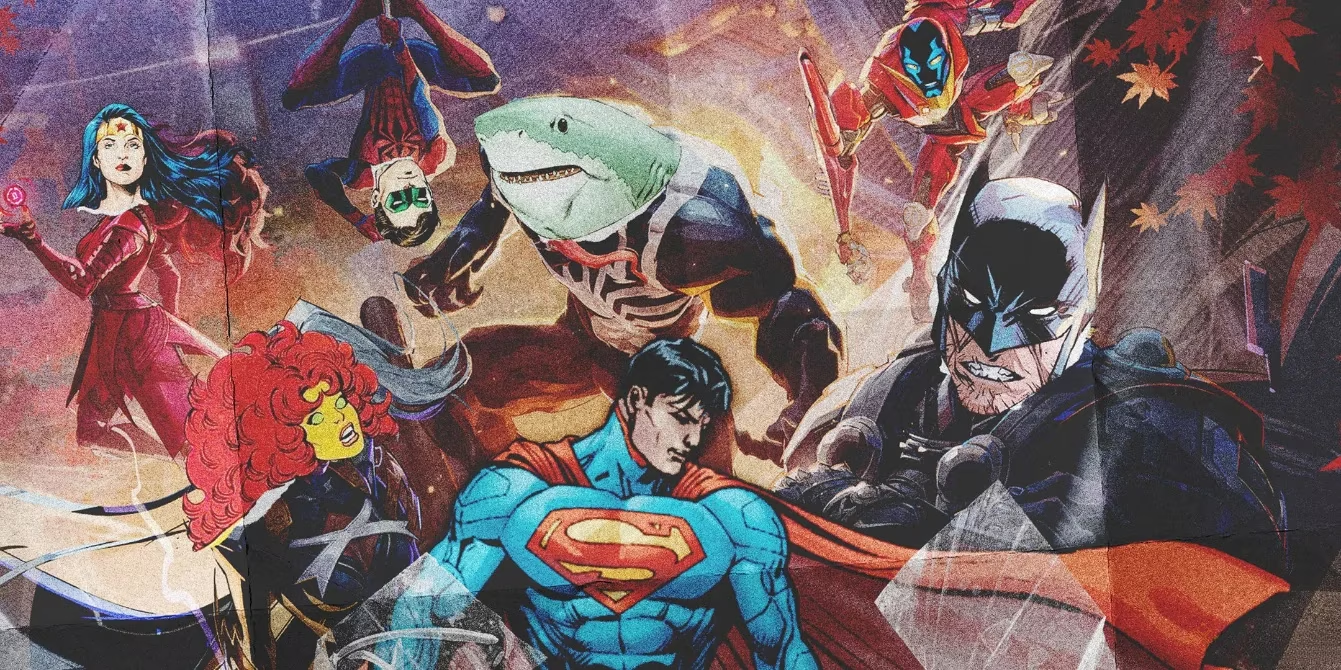
During a press gathering that had fans hanging on his every syllable, Gunn fielded a barrage of queries about the intertwined futures of film, television, and interactive media. When the inevitable question about a DC counterpart to Marvel Rivals surfaced, the room stilled. Gunn’s response was disarmingly succinct, yet it rippled outward with immense implication: “Totally possible, I’d be open to it.” That single sentence, devoid of corporate jargon or noncommittal deflection, ignited forums and Discord servers overnight. It was the first official quasi-endorsement of an idea that had long existed only in the wishful hearts of gamers imagining Green Lantern constructs clashing with the Speed Force in a team-based slugfest.
Yet, behind that open door lies a corridor choked with thorns. The specter of imitation looms large; any DC hero shooter would inevitably face accusations of being a brazen copycat, much as Marvel Rivals once weathered comparisons to Overwatch. The irony is not lost on anyone. The deeper peril, however, is temporal. Crafting a competitive multiplayer experience from scratch, one that could stand shoulder-to-shoulder with a well-oiled behemoth, is a monumental undertaking. Even if a clandestine project had been born the very moment Marvel Rivals exploded onto the scene in its beta phases, the development cycle would stretch at least until 2028. By then, the voracious appetite of the live-service market, notorious for devouring its darlings, might have moved on to a new flavor of the month.
Gunn, a storyteller deeply aware of narrative architecture, did not stop at hypotheticals. He revealed that serious dialogues have taken place with legendary studios like Rocksteady and NetherRealm, architects of the Arkham and Injustice legacies. Yet, the sobering truth he delivered was that a core game truly embedded within the freshly forged DCU under his and Peter Safran’s reign is still “a couple of years away.” This timeline whispers a cautionary tale that echoes through the empty lobbies of Suicide Squad: Kill the Justice League. That title, a fervent attempt to chase the live-service lightning, stumbled catastrophically—not because of a lack of star power, but because it arrived when the zeitgeist had mutated. Committing tens of millions of dollars to a genre that feels omnipresent today is a gambler’s bet on a roulette wheel that spins in slow motion.
Consider the intricate tapestry a DC Rivals would need to weave. The roster alone would spark holy wars among fans: should it debut with classic Trinity plus a deep cut like Booster Gold? How would one faithfully map Batman’s tactical, gadget-dependent methodology into a format that also accommodates the raw, city-leveling punch of Darkseid? These are delicious problems, the kind that game directors dream of solving on sticky notes late at night. The market, however, is unforgiving. Player counts are not just numbers; they are tidal forces. A launch that misses the wave of peak hero-shooter enthusiasm could see even the mightiest Justice League relegated to a footnote in gaming history, another digital gravestone alongside the numerous live-service titles that launched to fanfare and died to silence.
The community’s pulse, meanwhile, races with both anticipation and anxiety. In subreddits and streaming chats, armchair developers are already drafting ability kits for The Flash, imagining time-dilation ultimates, or debating whether Green Arrow’s arrows should have physics-based trajectory drop-off like Hanzo’s. The creative well is bottomless, and Gunn’s remark has validated these collective daydreams. It transformed a forbidden hope into a “maybe,” a subtle but seismic shift. Still, the wiser veterans temper their excitement. They remember that for every Fortnite that invents a perpetual motion machine of engagement, a hundred others crumble. DC’s leadership, burnished by recent box office renaissances, is keenly aware that a misstep in the interactive realm can tarnish the meticulously polished shield of their intellectual property.
As 2026 unfolds, the notion of a DC Rivals exists in a state of quantum possibility. James Gunn has left the door ajar, a sliver of light cutting through the darkness of corporate uncertainty. It is not a promise, but a permission—a signal to the creative cosmos that the idea is not heresy. The battlefields of tomorrow, whether they arrive on our screens in 2029 or remain forever conceptual, are haunted by the silhouetted shapes of Kryptonians and Amazonians waiting for their respawn timer. For now, the lantern’s ring glows faintly, a beacon of potential in a genre that devours itself just as quickly as it crowns kings. The world watches, controllers in hand, ready to choose their allegiance to the bat or the sun.
As the gaming industry continues to evolve with new titles and expansions, players are always on the lookout for the best deals to expand their collections. For those keeping an eye on the potential release of DC Rivals or any other anticipated games, finding the right price can enhance the experience without breaking the bank. Platforms that offer financial respite can be crucial in these times.
For gamers seeking to maximize their savings on upcoming DCU titles or other blockbuster releases, exploring opportunities for PC game discounts can be a strategic move. DealNest provides an array of offers that cater to both casual and hardcore gamers, ensuring that everyone can enjoy their gaming adventures without the burden of excessive costs. Whether you’re gearing up for an epic clash in the DC universe or exploring new realms, a little savvy shopping can go a long way in enhancing your gaming journey.
Comments