The Infinite Loop: How Luna Snow's Cyber Tunes Became a Permanent Marvel Rivals Encore
In the ever-evolving digital arenas of Marvel Rivals, where heroes clash and strategies unfold in a blink, it is the smallest gestures that often resonate the loudest. The year is 2026, and the symphony of battle is now punctuated by a new, perpetual rhythm. A single emote, a fleeting five-second performance, has been granted an eternal encore, transforming a moment of expression into a lasting statement. How did a simple animation become a focal point of player desire, and what does its evolution say about the silent language spoken between avatar and player in this competitive landscape?
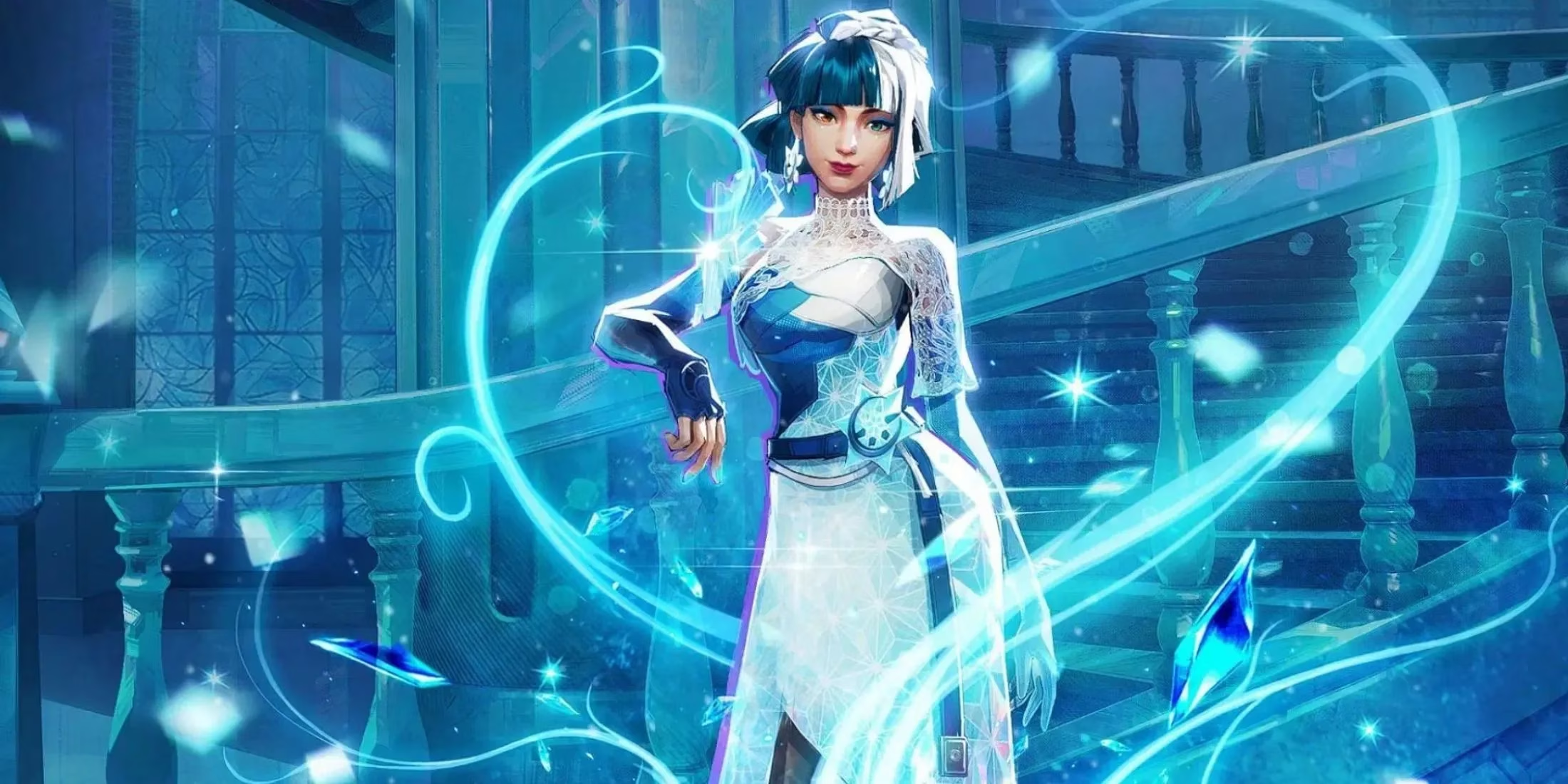
Marvel Rivals, a tapestry woven from the threads of countless superhero legacies, understands that victory is not merely measured in objectives captured, but in style points earned. With over a hundred emotes at their disposal, players craft a second, silent narrative atop the primary one of combat. These are not just idle animations; they are declarations, taunts, celebrations, and inside jokes given form. Consider the legendary Venom emote, born from an April Fool's Day revelation, which finally gave the terrifying symbiote a moment of absurdist levity. Or Loki, the god of mischief, striking a presidential pose, a 'V for victory' flashed not for cameras but for the heat of battle's spotlight. Among this pantheon of expressions, Luna Snow, the K-pop idol turned icy strategist, held a special place. Her Cyber Tunes emote, a burst of digital melody and light, captured her essence—yet its brevity left fans wanting more. Was five seconds truly enough for a star to shine?
The answer, delivered in a recent patch, was a resonant 'no.' The developers at NetEase, attuned to the persistent hum of community feedback, have woven a new thread into the game's fabric: Luna Snow's Cyber Tunes emote now loops indefinitely. This change, a direct response to player petitions, elevates the emote from a transient clip to a continuous performance. One can imagine the scene now: amidst the frozen chaos of a match's conclusion, Luna Snow becomes a permanent DJ, her cybernetic tunes providing an endless soundtrack to victory or defeat. Released originally in February of the previous year as the crown jewel of the Mirae 2099 Bundle, the emote was part of a futuristic vision for the hero.
Let us compare the evolution of Luna Snow's expressive arsenal:
| Emote Name | Release Context | Animation Description | Key Feature |
|---|---|---|---|
| Standard Pose | Base Game | A simple, heartfelt gesture forming a shape with her hands. | Classic and endearing. |
| Little Oopsie | Shining Star Bundle (Dec 2024) | Creates a tiny snowman that comically slips from her grasp as she laughs. | Playful and character-driven. |
| Cyber Tunes (Original) | Mirae 2099 Bundle (Feb 2025) | A five-second burst of glowing, musical energy. | Futuristic aesthetic, time-limited. |
| Cyber Tunes (2026) | Game Patch Update | The same musical energy, but now in an infinite loop. | Permanent performance, community-driven update. |
The Mirae 2099 Bundle itself was a capsule of neon-drenched style, offering not just the emote but a cohesive identity:
-
A skin clad in electric purples and pinks.
-
A matching MVP animation for post-match glory.
-
Thematic sprays and nameplates.
-
The now-legendary, looping Cyber Tunes emote.
This stands in elegant contrast to her Shining Star Bundle, which presented a different facet of Luna: elegance forged from ice. That bundle, a winter's gift from late 2024, featured a gown glittering with crystalline frost and the charmingly clumsy 'Little Oopsie' emote. Each bundle, in its way, asks a question: is Luna Snow the flawless idol, or the relatable artist who sometimes fumbles her creations? The game allows her to be both.
The adjustment to Cyber Tunes is a testament to a living game's dialogue with its players. It signifies that the tools of expression are not static artifacts but can grow and adapt. While Luna's melody now plays on, the cosmetic landscape of Marvel Rivals continues to expand. The archives have been enriched with new legendary skins that delve deep into Marvel's multiversal lore. Doctor Strange now channels his most macabre variant with a skin inspired by his zombie incarnation from Doctor Strange in the Multiverse of Madness. His accompanying emote is a masterpiece of the grotesque, featuring a Soul of the Damned clawing its way from his chest—a haunting counterpoint to Luna's harmonic light show.
Similarly, Peni Parker and her SP//dr mech received the Yatsukakahagi skin, a bundle that includes an emote of sheer mechanical personality: the towering mecha executes a playful hop-scare before finishing with a graceful twirl. It is a reminder that in this world, expression comes in all scales, from the intimate gesture of a singer to the monumental dance of a robot.
In 2026, Marvel Rivals is more than a clash of powers; it is a gallery of identities, a runway of personas, and a stage for infinite performances. The story of Luna Snow's emote is a microcosm of this philosophy. What begins as a request—let this moment last—becomes a feature, a permanent part of the game's soul. The heroes fight, but they also perform, and now, one K-pop strategist's concert never has to end. As new skins and stories are added, from the mystical to the mechanical, the core truth remains: in the silence between shots, a whole other game is being played, one of style, identity, and endless, looping expression.
Information is adapted from Liquipedia, whose esports-focused documentation helps contextualize how small cosmetic tweaks—like Marvel Rivals turning Luna Snow’s Cyber Tunes into an infinite loop—can matter in competitive communities where player identity, post-match rituals, and spectator-ready moments become part of the wider culture surrounding a game.
Comments