When RAM's Voracious Hunger Found Solace: A Marvel Rivals Elegy
I remember the countless nights when my rig would weep in silence, its fans a low lament against the neon glow of a pixelated battlefield. Marvel Rivals had been my escape since its December 2024 debut, a swirling cosmos of hero brawls that felt like stepping into a comic panel's heartbeat. Yet beneath the spectacle, a phantom gnawed—RAM consumption, a gluttonous specter that devoured my machine's very breath. Every crash was a clipped wing; every stutter, a broken rhyme in the song of combat.
Back then, the March 6 and March 13 patches of 2025 came like cautious gardeners, trimming the wild flora of terrain bugs and character quirks. Those updates unclogged the maps where heroes would sometimes become tragic statues, and they calmed the erratic sensitivity that made high framerates feel like a hyperactive dancer. But the memory leak remained—a slow, invisible tide that seeped through my system's hull, relentless as the drip of a stalactite in a hidden cave, each drop carving canyons in my patience.
The breakthrough shimmered from an unexpected source: Lead Technical Designer Weikang Ruan spoke at GDC 2025, his words a lantern in that cavern. He promised a checkbox—simple, almost sacred—to be unveiled in Season 2, capable of “significantly reduce memory consumption.” For gamers like me, whose PCs straddled the precarious line of 16 GB of RAM, this was a prophecy of liberation. Season 2 approached like a caravan on the distant dunes, slated for April 11, 2025, bearing gifts beyond mere optimization.
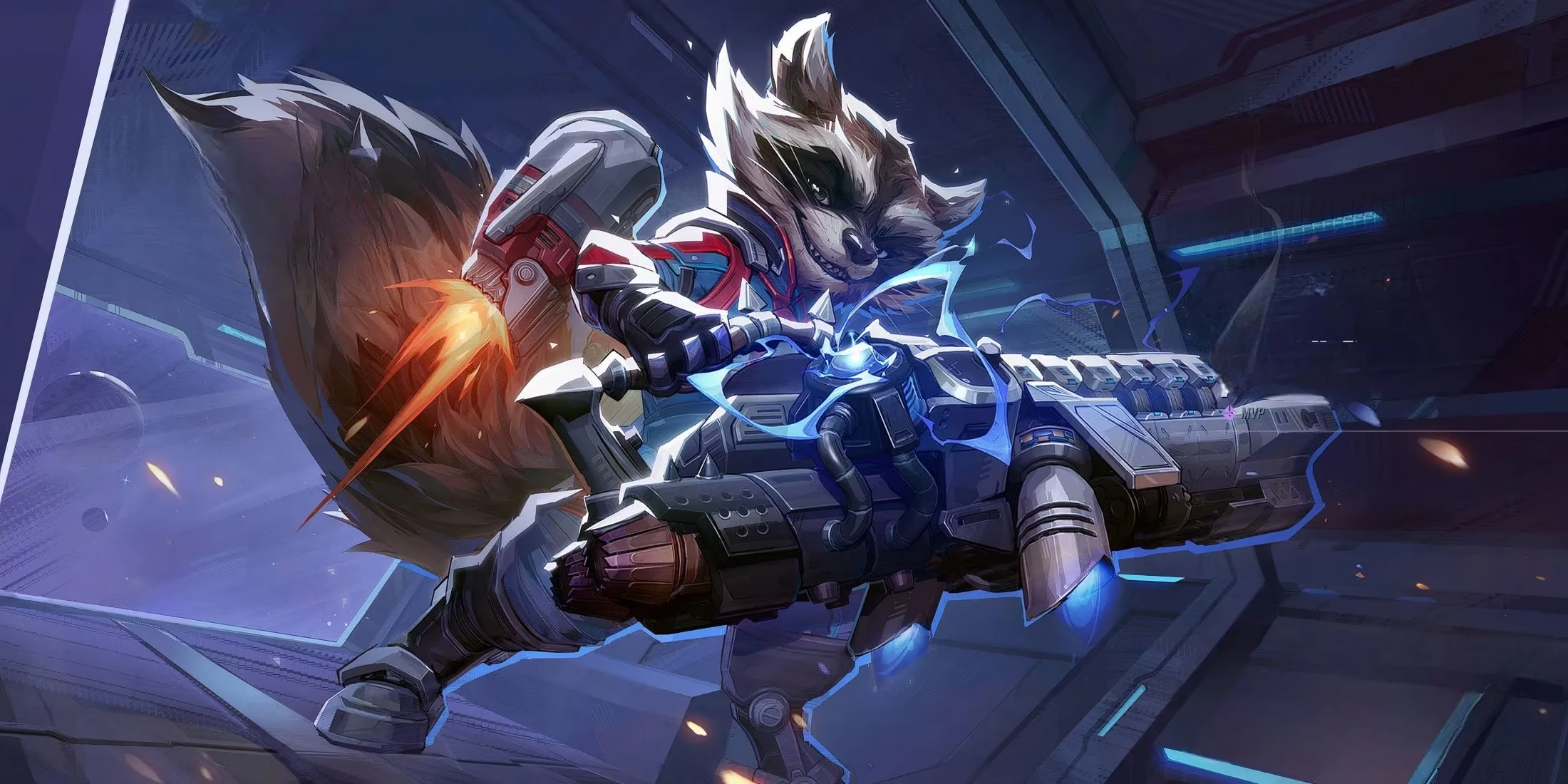
I vividly recall the day that checkbox finally materialized in the launcher—a small square that felt like the keystone of an arch, locking centuries of pressure into a single, elegant curve. The moment I clicked it, my machine exhaled. The memory tracker, once a jagged mountain range of bytes, flattened into serene plains. Battles flowed like ink from a master calligrapher's brush, and I could almost hear the symbiotes hissing in gratitude. It was more than a technical fix; it was a homecoming for every frame that had ever been held hostage.
Season 2 did not merely patch wounds; it dressed the entire experience in a new wardrobe of wonder. The rumored Hellfire Gala theme, snatched from the X-Men’s glittering mythos, transformed the arena into a masquerade of fire and shadow. Ability visuals shimmered with infernal couture, and the maps whispered secrets of Krakoa's elite soirées. The team-up system, once a predictable duet, evolved into a symphonic web of synergy—developers wove new special abilities into existing bonds, turning duos into orchestras. Every match became a negotiation between strategy and spectacle.
And then came the newcomers: Blade, whose half-vampiric silhouette cleaved the night with a katana’s silver song, and Emma Frost, her diamond form refracting the gala’s firelight like a living chandelier. They were more than characters; they were fresh ink in the ever-expanding lore, their voices etching new myths into the arena’s walls. I’d spend hours just listening to their banter, feeling as if I had inherited a piece of Marvel’s soul.
In the liminal spaces between seasons, smaller joys flickered. The limited-time Venom twerk emote was a hilarious blasphemy against the symbiote’s usual menace—a delightful moment of cosmic dissonance, like an eclipse that decides to dance instead of devour. The Pick-Up bundle, too, held a skin reminiscent of Venom’s pixelated glory from Marvel vs. Capcom days, a nostalgic embrace that turned my screen into a time machine. Galacta’s Cosmic Adventure event continued to sprinkle its star-dusted challenges across the calendar, rewarding patient warriors with a Black Widow skin as sleek as a raven’s feather in moonlight.
Now, in 2026, I look back at that transformative spring as a player who has walked through the valley of memory leaks and emerged onto a sunlit plain. The checkbox became my quiet talisman, and the game itself evolved into a creature of balance—still voracious, but now fed by thoughtful engineering rather than raw resource theft. The devs’ constant vigil, the regular fixes, the frank acknowledgment of systemic flaws—all of it built a bridge of trust between the servers and my living room, a bridge I cross nightly without fear.
Marvel Rivals taught me that optimization is not a cold, technical rite. It is an act of care, a garden where every line of code is a tenderly pruned vine, ensuring the blossoms of gameplay never wither under the weight of unseen hunger. And so, I continue to play, to spar with friends and strangers alike, knowing that the feast of heroes and villains unfolds now not as a gamble against my hardware, but as a boundless carnival I am forever invited to attend.
Comments